accounting & finance

QuickBooks X Cube

Unlock financial insights and efficiency

hero-qb

Financial data, managed.

cloud-monitor-exchange 1

Always be syncing

Cube works in the cloud, so you'll always have your most recent data.

Computer-charts

Deep analysis means better decision-making

Leverage the data from QuickBooks to provide advanced analytics, scenario modeling, and what-if analysis.

App

Find the gold in your accounting data

Generate reports and dashboards to get valuable insights into key financial metrics.

Reporting Hero (2)

Why integrate QuickBooks with Cube

Go live in days, not months—startup or enterprise FP&A teams. No consultants required.

  • Flexible data mapping

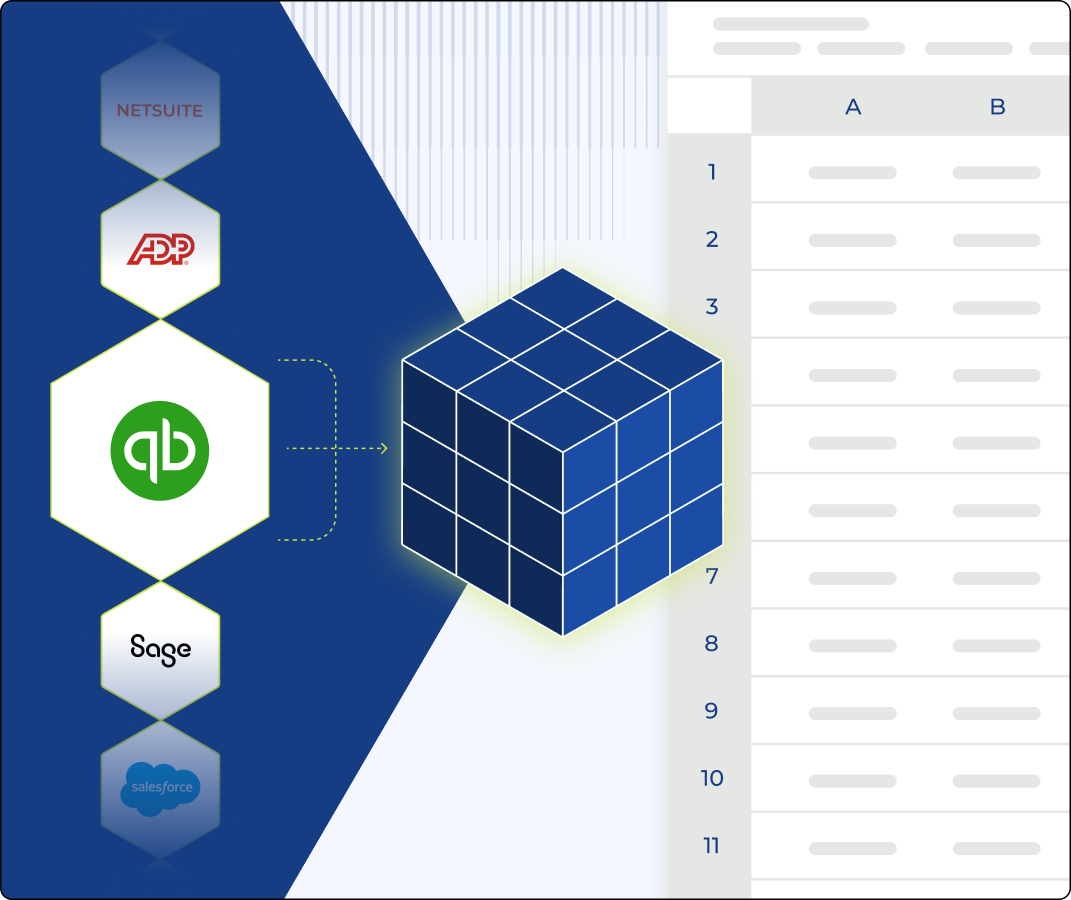
    Map specific data fields from QuickBooks to relevant data categories in a many-to-one mapping style to synthesize data for easier analysis and reporting.

  • Improved data accuracy

    Reduce discrepancies and errors, ensuring greater data accuracy and reliability in financial analyses and forecasts.

  • Streamlined forecasting and budgeting

    Combine actual financial data from QuickBooks with budgeting and forecasting data for more comprehensive and accurate financial planning and analysis.


Results from teams who got their data under control

tecovas

Now with Cube, we spend more than half our time on strategic work—partnering with the business instead of cleaning up the numbers.

James Mann


CFO

YMCA-1

As Cube is based in Excel, it is easy to look at things in different ways to quickly analyze data or change the drivers of your forecast.

Lauren O'Connor


Director of FP&A

FAQS

Still have questions?

What will an Intuit QuickBooks and Cube integration allow me to do?

Eliminate manual consolidation and gain increased visibility into your financial data and performance. Cube's business intelligence capabilities allow you to create interactive dashboards, reports, and visualizations based on the data extracted from QuickBooks. That way you can monitor key financial metrics, track trends, and make data-driven decisions more efficiently.

What data can be transferred as part of an Intuit QuickBooks and Cube integration?

Standard Integration: Transactional data


Custom Integration: Transactions, operational data, inventory data, headcount data, and more.


Detailed: Cube supports a detailed-level importer from Quickbooks to pull line-level details of financial


Consolidated: Cube supports a detailed-level importer from QuickBooks to pull a consolidated data view.

Can the integration between Intuit QuickBooks and Cube be customized to meet my business requirements?

Yes, specifically for data categories and metadata (what data you bring over and how you organize your model and hierarchy). Data categories and metadata vary by connection type, so contact a member of our team to learn more!

I have a very large amount of data. How does this integration perform under load?

Depending on your volume of data, Cube can pull consolidated or detailed data to prevent performance degradation.

What's the typical setup time for an Intuit QuickBooks and Cube integration?

Two to four weeks.

Still have questions?

Stop Cleaning Data. 
Start Driving the plan.

With Cube, finance teams can focus on what matters—guiding the business forward with speed, precision, and confidence.