Accounting & Finance

Sage Intacct X Cube

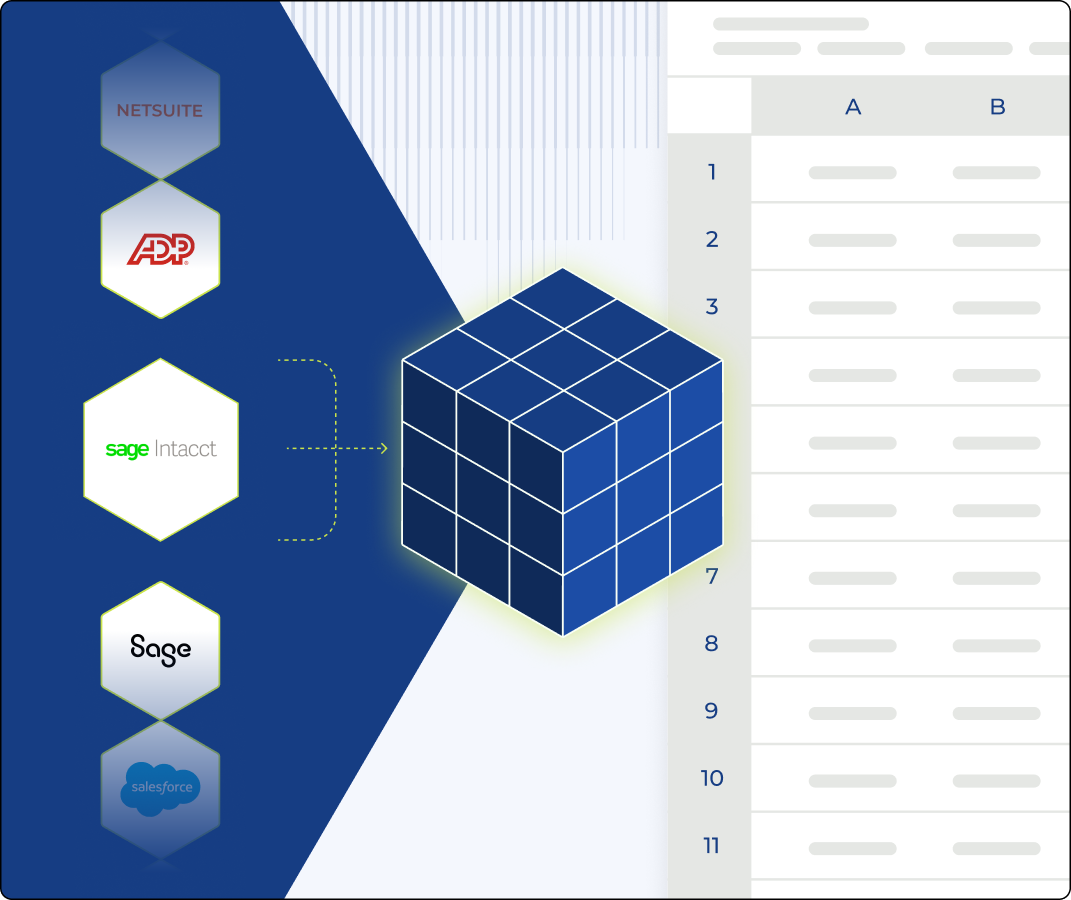
Centralize your financials

hero-sage-intacct

The data you need, in the spreadsheets you use every day.

cloud-icon

Fresh data on command

Easily analyze your transactions after syncing your chart of accounts.

pc-icon

Model and budget with ease

Import your historical data to budget and model in your preferred spreadsheet.

knowledge-sharing-icon

Get custom financial reporting at your fingertips

Create seamless custom reports for any situation with Cube's Saved Search feature.

Reporting Hero (2)

Why integrate Sage Intacct with Cube

  • Consolidate financials

    Simplify the process of generating consolidated financial statements and insights.

  • Collaborate across departments

    Foster better collaboration and decision-making by giving different departments within your organization access to the same financial data and reports.

  • Enhance budgeting and forecasting

    Create more accurate and detailed financial projections and scenario analyses.

Strategic Finance in Action

tecovas

“Now with Cube, we spend more than half our time on strategic work—partnering with the business instead of cleaning up the numbers.”

James Mann


CFO

YMCA-1

As Cube is based in Excel, it is easy to look at things in different ways to quickly analyze data or change the drivers of your forecast.

Lauren O'Connor


Director of FP&A

FREQUENTLY ASKED QUESTIONS

FAQS

Seamlessly connect of your general ledger data, including your chart of accounts and journal entries. Sync data as needed, ensuring users can access the most up-to-date Sage Intacct data within Cube. This real-time data syncing enhances reporting, analysis, and financial decision-making processes while minimizing manual efforts and ensuring data accuracy.
Transactional data.
Yes, specifically for data categories and metadata—i.e., what data you bring and how you organize it for your model and structure. 
Depending on your volume of data, Cube can pull consolidated or detailed data to prevent performance degradation. 
If needed, you can map from each ERP into the master Cube chart of accounts.
Around two weeks.

Stop Cleaning Data. 
Start Driving the plan.

With Cube, finance teams can focus on what matters—guiding the business forward with speed, precision, and confidence.